Unambiguous dhyānas of Viṣṇu with Sarasvatī and Lakṣmī in the Assamese tradition

The dhyānas here are quoted from The Kamarupa School of Dharmashastra by Naliniranjan Sharma. The bolded portions indicate the unambiguous mention of Sarasvatī and Lakṣmī.

First dhyāna(dhyāna mantra of Viṣṇu/Vāsudeva of the Viṣṇujāgara/Gonda Cauphari Sabha) from the paddhati of Shri Nabin Chandra Sharma of Dipila village in Mangaldai

oṃ vāsudeva śuddhasphaṭika saṃkāśaṃ ajānulamvita vanamālopaśobhitaṃ।
pītavastrayugadharaṃ kuṇḍalāṃkṛta karṇāpāniyugalaṃ śrīvatsakaustubhoraskam॥
kirītināṃ yajñopavītinaṃ dakṣiṇakarābhyā mūrdhādhaḥ krameṇadhṛtagadā padmam।
vāmakarābhyāntathaivadhṛta cakra śaṃkhaṃ dakṣiṇa pārṣvasthayā suvarṇavarṇayā lakṣmyā sevyamānaṃ॥
vāmapārśvasthayā śiriṣa varṇayā sarasvatyā sevitaṃ pañcavarṇopeta vanamā ānvitam।

kundakusumābham śrīvatsa vakṣasamaruṇa kaustabhagrīvam॥
pūrvādidalastha saṃkarṣaṇapradyumnāniruddha nārāyaṇa brahmāviṣṇu narasiṃhavarāha sametam।
garuḍadhvajaṃ garuḍādhirūḍhaṃ sūryamaṇḍala candramaṇḍala vahnimaṇḍalopari śītāṣṭadala padmopaviṣṭaṃ॥


evam dhyātvā oṃ namo bhagavate vāsudevāya namaḥ।


Second dhyāna quoted from a paddhati preserved in the Gaudhati University Library

vāsudevaṃ viśuddhasphaṭikaprabhaṃ anavaratasāmavedādi gāyanotphulla mukha kamalaṃ।
pītavastradvaya dharaṃ caturbhujaṃ dakṣiṇordhakaradhṛta kṛṣṇavarṇagadaṃ dakṣiṇādhakaradhṛta śuklapadmam।
vāmordhvakaradhṛta sūryaśatasamaprabha cakraṃ।
vāmādhakaradhṛta pūrṇacandrābhaśaṃkhaṃ।
dakṣiṇa pārśvasthayā suvarṇavarṇayā lakṣmyā sevyamānaṃ।
vāmapārśvasthayā śirīṣa varṇayā sarasvatyāsevyamānam॥

yajñopavītinaṃ pañcavarṇopeta vanamālānvitaṃ।
kundakusumābha śrīvatsa vakṣamaruṇa varṇa kaustubhagrīvaṃ
sauvarṇa kirīṭa kuṇḍalāṃgada kaṃkaṇāṅmgurīya keyuramaṇḍitaṃ।
hṛdi muktāhārānvitam।
pūrvādi dalastha saṃkarṣaṇa pradyumnāniruddha nārāyaṇa brahmā viṣṇunarasiṃhavarāha sametaṃ।
garuḍadhvajaṃ garuḍādhirūḍhaṃ sūryamaṇḍala candramaṇḍala vahnimaṇḍalopari śītāṣṭadala padmopaviṣṭaṃ॥

iti dhyātvā

This is acknowledged by Gaudiyas in the Vedanta-Shyamantaka well also,as noted in the following
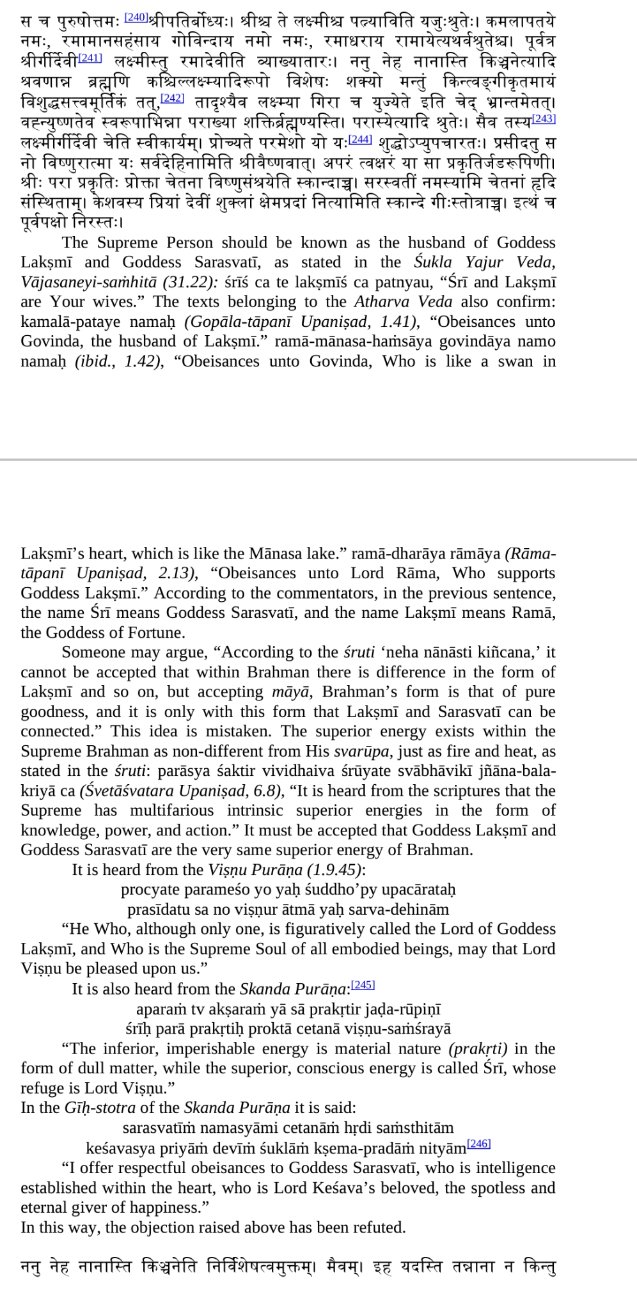
section(especially the Gīḥ stotra of the Skanda Purana)

The old location of Jālandhara Pītha

Amongst the 51 śākta pīthas,the four most important are Kāmarūpa,Oḍḍiyāna,Jālandhara and Pūrṇagiri. The medieval importance of this can be gauged by this śloka:

rūpātītaṃ tu kāmākhyāṃ rūpaṃ pūrṇagirirmahāna।
pādaṃ jālandharaākhyāṃ tu piṇḍaṃ oḍraṃ prakīrtitaṃ।।

(Here Oḍḍiyāna has been concieved to be at Oḍra after the complete loss of the mūla Oḍḍīyāna even in memory to āstika writers,but that is another point to be noted in a different article).

This post is going to discuss the location of the historical Jālandhara pītha as per old historical refernces and relevant śāstra.(Note:The modern Devi Talab Mandir where Tripuramalini is worshipped is not the historical Jālandhara,and such lists which list the devi as such have little idea of the actual pitha/give only generic names for the devī like Caṇḍī)

Historical and the relevant śāstrīya references to Jālandhara pītha that allow us to locate the devīpīṭha with a low degree of ambiguity

  • Kumārīkhaṇḍa of Manthānabhairavatantra:idṛg jālandharaṃ pīṭhaṃ jvālāvvā tatra viśrutā(There is the famed mother Jvālā at Jālandhara pītha)
  • Abu’l Fazl in his Ai’n-I-Akbari notes about Jālandhara,Kāmākhya,Śāradā and Tulijā Bhavānī as four main pīthas and describes Jālandhara being near Nagarkot and the prescence of natural flames being the object of worship there.
  • Kalhaṇa in the 3rd taraṇga of the Rajatarangini alludes to the same general area of Kangra/Trigarta as being called Jālandhara/Jālandharāyaṇa
  • The importance of this pīṭha to Buddhists and their descriptions of travels to it leave no ambiguity as to which is the actual temple being referred to as the Jālandhara pītha.

मेधादक्षिणामूर्तिमन्त्रविधिः(कुछ बात श्री गीर्वाणेन्द्रसरस्वती विरचित प्रपञ्चसारसारसंग्रह से)

जो बात प्रपञ्चसारसारसंग्रह से नहीं है,वो Green highlight से है और् परम्परा भेद् के कारण मे है।

ब्रह्मा ऋषिः(वा शुकब्रह्म)।गायत्री चन्दः।मेधा दक्षिणामूर्तिर्देवता।मेधा बीजम्।स्वाहा शक्तिः।(अथवा:मेधा बीजम्।प्रज्ञा शक्तिः।स्वाहा कीलकं।)शड्दीर्घ न्यास(आं इत्यादि)।…प्रज्ञापादरहितो वा मन्त्रः।

कृष्णाष्टमिरारभ्य कृष्णचतुर्दशीपर्यन्त चत्वारिंशत्सहस्रं जपेत्।आज्येन दशांश पुरश्चरणहोम।लक्षं वा जपेत्,विष्ण्वालये वा पश्चिमद्वारशिवालये वा।अस्मिन्पक्षे क्षीरप्लुतशुद्धतिलैराज्येन पायसान्नेन वा दशांशं पुरश्चरणाहोमः।

ये सब करने के लिए मेधा दक्षिणामूर्ति मंत्र उपदेश(द्वाविंशाक्षर अथवा चतुर्विंशाक्षर) आवश्यक है। बिना मंत्रोपदेश से उपरोक्त कार्य करणीय नही है।

On right view,Buddhist-coloured deities and Hindu practice

Ths is a novice’s attempt to answer about why the practice of some deities:tArA,chinnamastA(to a small extent vajrayoginI too),vilAsinI also is soiterologically relevant:

[Edit:Please do not take this as some word of shAstra or AchAryavAkya or something,I am not any guru,I am just thinking my thoughts out loud after asking my question and trying to process what I got]

An example of animus Buddhists displayed to Hindu systems can be seen about. This ritual consumption of brahmin flesh(a huge NO in any Hindu system that will ever exist) stems from two sources:(1)A kApAlika background is suggestible,as noted by the offering of brahmapuShpa to gain power as recorded by the author(I am not saying that that system existed in toto like that at Adi Shankara’s time but it transmits some relevant information about a cult with similar practices) and (2)actual dvesha for brAhmaNas,the gurus and systemizers of a lot of the native systems in the first place from where they took our mantras from:Hence these deities under the influence of the Bauddha transmitters took on Bauddha dresses in various aspects(like Rishi,etc)

With deities worshipped by such people,how is it that our people gain mukti?Taking leads from this article suggested by the author of the Kamakotimandali blog suggests that without a proper understanding of the tattvic scheme,such Bauddha upAsakas in the 36 tattva scheme would attain at best Buddhi tattva,mahAdevIing the chintAmaNI she is, granting the sAdhakas according to their view. Or worse,worldly siddhi mainly only more often.

Another thing is that in Hindu views,the deity with the same iconography is interpreted differently. An example is here where the image which is considered that of Arya achala is interpreted as that of krodharAja rudra trampling some demonic yakSha. Sometimes the descriptions in the Astika version are superficially different(sarvasiddhi and sarvabuddhi rather than sarvabuddhaDAkinI).

So the transmissions which have come back to Hindus with that Buddhist dress have in key,a different understanding than the Buddhists of what they are worshipping+when they got back the tranmissions from those who achieved only siddhi,their correct understanding put them on higher states of AdhyAtma than the Bauddhas they got it from.(albeit coloured by the ‘shunya’ type of language they inherited)[because they could understand the tattvas better and the devI granted them a place in those higher tattvas]. Another core difference is a practical respect in terms of ritual to brahmins(in the bhojana anga of the Hindu method of attaining siddhi in mantras).

Addendum by @TheRajarshi:

1. The necromancy practices are still prevalent even among H Kapalika-s (few are there still) but neither done in public nor publicized.
2. The actual consumption is mostly a tokenism in ritual setting to gain powers. 3. The mention of “brahmin” is because brahmins were the ones who had the tapa-shakti, other Vs did not. Same way even today in H viracara when taking a kapalapatra one cannot take random one…. else there is no Shakti in it, and becomes useless. Specific type of kapalas are useful. Guru decides basd on nature of sadhaka/na. Same logic baudhas were using. A kapala of a an individual who was a good yogi/sadhaka is highly prized. Or a chandala for certain rituals.
3.The icons of baudha deities trampling on H (IMO) was result of assimilation + abhicara practices which each group was doing on the other. But by time of Kalacakra tantra the Baudhas had come full circle and accepted H deities without any modification/distortion – post-Islam.
4. Coming to practical upasana Vajrayanists also produced terrific siddhas (not lower level at all if one knows how to judge the level of a siddhi) as did Hindus.

Determination in daily mantrasādhanā

ihāsane śuṣyatu me śarīraṃ tvagasthimāṃsaṃ pralayaṃ ca yātu।
aprāpya bodhiṃ bahukalpadurlabhāṃ naivāsanāt kāyamataścaliṣyate॥

[Let my body dry up on this very seat,let the bones,skin and flesh perish,but without attaining the rare state of Buddhahood,never shall I leave this seat]
(From the Buddhacharita)

This can be taken in its Astika version as:
ihāsane śuṣyatu me śarīraṃ tvagasthimāṃsaṃ pralayaṃ ca yātu।
aprāpya siddhiṃ bahukalpadurlabhāṃ naivāsanāt kāyamataścaliṣyate॥

Here the Buddhahood conception is replaced by siddhi.

And about siddhi(from the text mantrayogasaṃhitā)

samādhirlayayogasya mahālaya itīritaḥ।
haṭhasya ca mahābodho yathāyogaparāyaṇaiḥ।
tathaiva mantrayogasya mahābhāvaḥ prakīrtitaḥ॥
dhyānādhikāraḥ samprokto yāvadvai tripuṭīsthitiḥ।
vilīnāyāṃ ca tasyāṃ vai mahābhāvasamudbhavaḥ॥
mantrasiddhyā devatāyāṃ vidhāya manaso layam।
tripuṭīnāśato yogī samādhimadhigacchati।
mano mantrastathā devo jñāyate prathamaṃ pṛthak।
tataḥ parasparaṃ tattajjñāne linaṃ prajāyate॥
dhyeya-dhyātṛ-dhyāna-rūpatripuṭīvilayo bhavet।
imāmavasthāṃ saṃprāpya sādhakeṣu prajāpate।
romodugasamastabdhā ca tathā”nandāśruvarṣaṇam॥
krameṇa ca manolīne samādhiḥ kila jāyate।
samādhinā bhavantyāśu kṛtyak^ityā hi sādhakāḥ।
mahābhāvopalabdhirhi mantrayoge’ntimaṃ phalam॥

And from the devīgītā:
yāvan manolayaṃ yāti devyāṃ samvidiṃ parvata।
tāvanadiṣṭamanuṃ mantrī japahomaiḥ samabhyaset॥

[The sādhaka must do japa and homa until manolaya has occured].

[The above post is inspired by a point Sri Mahendranath Gupta made in a book on him written by Swami Nityatmananda].


Āvaraṇas of Jagannātha as Kṛṣṇa in the Puri Śrīmandira

There are seven āvaraṇas(surrounding ‘layers’ of deities) around the main Jagannātha deity in the Puri temple. They are:

  1. The four playmates of Kṛṣṇa
  2. Aṅgas of mantra
  3. Eight wives of Kṛṣṇa
  4. Parents,brother,sister of Kṛṣṇa,gopas and gopīs
  5. Five Kalpavṛkṣas
  6. Certain bhaktas of Kṛṣṇa
  7. 10 dikpālas

First āvaraṇa:Contains Dāmā,Sudāmā,Vasudāmā and Kiṅkiṇi(similar to Kṛṣna,adolescent,carrying flute and ball)
Second āvaraṇa:Contains the āṇgas conjoined with the corresponding parts of the main mantra(arcakāya svāhā, kṛṣṇāya hṛdayāya namaḥ, govindāya śirase svāhā…ultimately 9 members in this circle. The dhyānas of the pallavas are given in the Nīlādrīmahodaya(eg:svāhā is red-complexion,dressed in red and having a crown on head and two lotuses in hands,namaḥ being white complexioned,three eyed and basically like the common form of Bhuvaneśvarī in appearance otherwise)
Third āvaraṇa:Rukmiṇī,Satyabhāmā,Naganjitā,Sunandā,Mitravindā,Sulakṣaṇā,Jāmbavatī,Suśīlā(lotus and chowrie in their hands)
Fourth āvaraṇa:Vāsudeva,Devakī,Nanda,Yaśodā(the fathers with jñānamudrā and abhayamudrā,the mothers having a varadamudrā and a pot full of pāyasa),Balabhadra(halamusaladhārin,with quivering eyes under the effect of alcohol),Subhadrā(varābhaya,like hot gold or dark green),gopas and gopīs with flutes,cane sticks,horns,etc
Fifth āvaraṇa:The kalpavṛkṣas Mandāra,Santāna,Pārijāta,Kalpadruma,Haricandana(the last one is placed in the centre under which Kṛṣna is)
Sixth āvaraṇa:nityabhaktas:Nārada,Parvata,Uddhava,Akrūra,Niṣaṭha,Dāruka,Viṣvaksena,Vainateya(Garuḍa)
Seventh āvaraṇa:Indra,agni,Yama,Nairṛta,Varuṇa,Vāyu,Kubera,Īśāna,Ananta,Brahman

On Jagadguru Pītāmbara Siddhāntavāgīśa,the most famous exponent of the Kāmarūpa school of Dharmaśāstra

On Pītāmbara Siddhāntavāgīśa’s life:Gleanings from his own works

Pītāmbara Siddhāntavāgīśa,the most famous exponent of the Kāmarūpa school of Dharmaśāstra is,in the tradition of many Sanskrit authors,quite rectinent on his personal life. However he mentions the following details

  • Dāyakaumudī:He was born at a place in the Southern part of the Lauhitya(Brahmaputra)
  • He was in a large part taught by his father(the benedictory verse of the Śrāddhakaumudī)
  • He was a smārta devotee of Nārāyaṇa and pays obeisances to Śiva,Durgā and Sūrya also. This last bit can be gleaned from the Daśakarmakaumudī where the term ‘śrīvāsudevamārādhya…’ is used.
  • He mentions in the end of his Śuddhikaumudī that he accomplished this work in 1534 śakābda(1612 CE)
  • In the colophon to his Grahaṇakaumudī he mentions that he was patronized by Lakṣmīnārāyaṇa of Kāmarūpa.

Siddhāntavāgīśa’s life:Gleanings from other sources

  • Bṛhatrājavaṃśāvalī states that Cilārāya the brother of Naranārāyaṇa brought Puruṣottama Vidyāvāgīśa(the author of the grammatical work Ratnamālā) and Pītāmbara from Gauḍa
  • He was also said to be a court poet of Naranārāyaṇa and probably served in the court of Balinārāyaṇa as well.
  • Maṇgaladair Buranji introduces him as the Dīkṣāguru of the king of Daraṇga,who donated a large amount of property in his province and his descendants still live there.
  • Nagendranath Vasu in his Social History of Kamarupa states that his kaumudīs were followed by the kings,citing the Bṛhatrājavaṃśāvalī,which noted that those who violated the rules and regulations of society as laid down for the various varṇas and āśramas of human society and life by Jagadguru Pītāmbara Siddhāntavāgīśa were punished by the king.

Works of Pītāmbara Siddhāntavāgīśa

He is traditionally said to have composed 18 kaumudīs(digests of smṛtiśāstra),which are listed popularly as;

  • Daṇḍakaumudī
  • Pretakaumudī
  • Vṛṣotsargakaumudī
  • Pramāṇakaumudī
  • Śrāddhakaumudī
  • Durgotsavakaumudī
  • Ekādaśīkaumudī
  • Śuddhikaumudī
  • Pratiṣṭhākaumudī
  • Saṃkalpakaumudī
  • Prāyaścittakaumudī
  • Tīrthakaumudī
  • Pañcadīkṣākaumudī
  • Sambandhakaumudī
  • Tithikaumudī
  • Dāyakaumudī
  • Ācārakaumudī

Hiramoni Goswami(on whose introduction this article is based) cites Taranath Goswami’s list as follows

  • Dāyakaumudī
  • Śrāddhakaumudī
  • Malamāsakaumudī
  • Nirṇayakaumudī
  • Sambandhakaumudī
  • Tattvakaumudī
  • Āhnikakaumudī
  • Vivādakaumudī
  • Aśaucakaumudī
  • Tithikaumudī
  • Pretakaumudī
  • Śuddhikaumudī
  • Pañcayajñakaumudī
  • Dīkṣakaumudī
  • Janmāṣṭamīkaumudī
  • Vṛṣotsargakaumudī
  • Saṃskārakaumudī

Hiramoni Goswami also cites Ghanakanta Sarma’s list of Pītāmbara Siddhāntavāgīśa’s kaumudīs which runs into 28

  • Dāyakaumudī
  • Śrāddhakaumudī
  • Malamāsakaumudī
  • Nirṇayakaumudī
  • Sambandhakaumudī
  • Tattvakaumudī
  • Āhnikakaumudī
  • Vivādakaumudī
  • Aśaucakaumudī
  • Tithikaumudī
  • Pretakaumudī
  • Śuddhikaumudī
  • Pañcayajñakaumudī
  • Vṛṣotsargakaumudī
  • Dīkṣākaumudī
  • Janmāṣṭamīkaumudī
  • Saṃkrāntikaumudī
  • Daśakarmakaumudī
  • Tīrthakaumudī
  • Pramāṇakaumudī
  • Patrakaumudī
  • Prāyaścittakaumudī
  • Jyotiṣkaumudī
  • Daṇḍakaumudī
  • Divyakaumudī
  • Sākṣyakaumudī
  • Vyavahārakaumudī
  • Kṛtyakaumudī

Some other works of his that are unpublished amongst digests are Grahaṇakaumudī,etc.(apparently the recently published Śivarātrikaumudī is a part of Durgotsavakaumudī:oral communication). He also is credited with writing commentaries on Vācaspati Miśra’s Dvaitanirṇaya(Dvaitanirṇayadīpikā) and on the tantric digest Śāradātīlaka(Guḍārthaprakāśikā). Very few of his works have been published in print.

On the stotra of the eight names of Gaṇeśa by Viṣnu from the Brahmavaivarta Purāṇa

https://sanskritdocuments.org/doc_ganesha/gaNeshAShTakamviShNuBVP.html the text of the stotra is at the Sanskrit Dcouments website,I am translating it here.

Before Viṣṇu begins this stotra to Gaṇeśa,he affiliates these names of Vināyaka to the Sāmavedic tradition(putranāmāṣṭakaṃ stotraṃ sāmavedoktamīśvari)

He is known as Gaṇeśa,Ekadanta,Heramba,Vighnanāyaka,Lambodara,Śūrpakarṇa,Gajānana and Guhāgraja.

O Mother,beloved of Hara,do listen from me the meaning of these eight names which is the summary of the stotra and removes all obstructoions.

‘Ga’ stands for knowledge, ‘Na’ stands for mokṣa. The one who is the Lord of them both is Gaṇeṣa,I bow to Him.

‘Eka’ stands for principal,’danta’ stands for strength. The one who is the foremost of the strong persons is Ekadanta,and I bow to Him.

‘He’ stands for the poor,and ‘ramba’ stands for the protector,hence the one who is the protector of them(pālakaṃ dīnalokānaṃ) is Heramba.

‘Vighna’ stands for the dangers,and ‘nāyaka’ stands for its remover,hence He is known as vighnanāyaka and I adore Him.

The one who was endowed with a protruding belly because of the eating of the food provided by Viṣṇu and His own father is called lambodara,and I bow to Him.

The one’s whose ears are like winnowing baskets to remove obstructions,and bestows wealth and learning is known as Śūrpakarṇa,and I bow in reverence to Him.

The one on whose head was placed the prasādaṃ(consisting of flowers,hence a garland) of Viṣnu by the munis,I bow to the elephant-faced one known as Gaja-vaktra.

He was born earlier than Skanda,hence He is known as Guhāgraja,and I offer my obeisance to Him.

Oh Durgā,these eight verses consist of many śaktis and different meanings and is auspicious. Please look into the veda,O Putra(Viṣṇu is addressing devī here as putra),and nullify your anger.

The one who recites this stotra thrice a day(at each of the sandhyās) enjoys all worldly pleasures and becomes victorious in the universe like Garuḍa,the sun of Vinātā who is always victorious over serpents.

With the grace of Gaṇeśvara he attains all knowledge,the one desiring a son gets a son and one desiring a wife gets a virtuous wife. And the extremely dull person becomes a great poet and learns all vidyās.

A sandhyAvandana vidhi for all

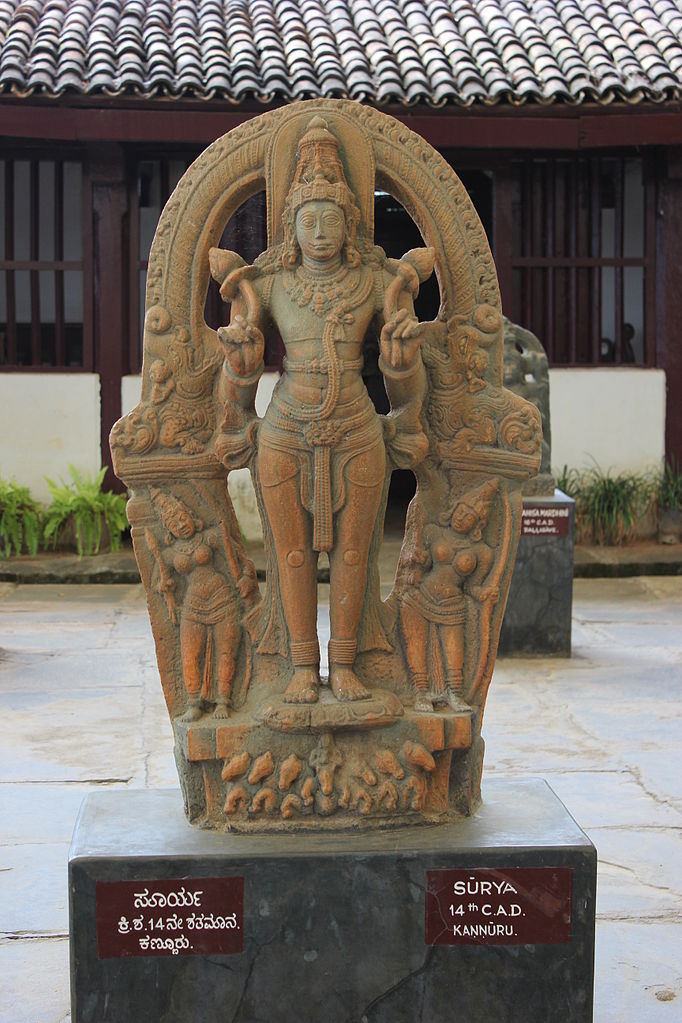
682px-Sculpture_of_Surya_the_sun_god_dated_to_the_14th_century_from_Kannuru
[Image is of sUrya with His retinue and His seven horses and charioteer,sourced from Wikimedia Commons]

[This vidhi was shared to me by an upAsaka who wishes to remain private,just like the author of this blog]. And the advantage of this vidhi is that it can be performed by all regardless of initiation into vaidika gAyatrI or tAntrika or lack of it,or sex or caste,or birth.

Achamya(you do Achamana with achyutAya namaH,anantAya namaH,govindAya namaH) –

facing east, arghyapradAna[West at sunset]
gaNAdhipa surAdhyaksha chintAmani ganeShvara
siddhidAyaka vighnesha gR^ihAnArghyam namo’stute [This is a namaskAra to gaNesha]

gaNapataye namaH idamarghyam (3) [saying this mantra 3 times,offer arghya to ganesha three times]

rajjuvetra kasApANe kAshyape garuDAgraja
arka sutAruNa svAmin gR^ihAnArghyam namo’stute [This is a namaskAra to aruNa,sUrya’s charioteer]

aruNAya namaH idamarghyam (3)[saying this mantra 3 times,offer arghya to aruNa three times]

ehi sUrya sahasrAMSho tejorAse jagatpate
anukampaya mAm bhaktyA gR^ihAnArghyam namo’stute [namaskAra to sUrya bhagavAn]

sUryAya namaH idamarghyam (3)[saying this mantra 3 times,offer arghya to sUrya three times]

mitrAya namaH
ravaye namaH
sUryAya namaH
bhAnave namaH
khagAya namaH
pUshNe namaH
hiranyagarbhAya namaH
marIchaye namaH
AdityAya namaH
savitre namaH
arkAya namaH
bhAskarAya namaH (12 obeisances to sUrya with His names in the dative case)

kAmakrodhAdibhir mUDA pAtakam nu karomyaham
sarvapApakshayam kR^itvA raksha mAm dyumaNe prabho
AyurArogyam aishvaryam j~nAnam vittam prayachCha me
svargamapyapavargam cha jagadIshvara bhAskara

[Forgive whatever I have done from kAma and krodha,prabhu sUrya bhagavAn,and protect me from pApa. Please give me Ayuh,Arogya(health),Aishvarya(wealth),j~nAna,svarga and apavarga:Would refer to apavarga as mukti mArga here,jagadIshvara bhAskara(another name for sUrya)]

prAsya

The vidhi and mantras in देवनागरी लिपि

आचम्य

Facing east,अर्घ्यप्रदान[West at sunset]

गणाधिप सुराध्यक्श चिन्तामनि गनेष्वर
सिद्धिदायक विघ्नेश गृहानार्घ्यम् नमो’स्तुते[This is a namaskAra to गणेश]

गणपतये नमः इदमर्घ्यम् (३) [saying this mantra 3 times,offer अर्घ्य to गणेश three times]

रज्जुवेत्र कसापाणे काश्यपे गरुडाग्रज
अर्क सुतारुण स्वामिन् गृहानार्घ्यम् नमो’स्तुते[[This is a namaskAra to अरुण,सूर्य’s charioteer]

अरुणाय नमः इदमर्घ्यम् (३)[saying this mantra 3 times,offer अर्घ्य to अरुण three times]

एहि सूर्य सहस्रांषो तेजोरासे जगत्पते
अनुकम्पय माम् भक्त्या गृहानार्घ्यम् नमो’स्तुते

सूर्याय नमः इदमर्घ्यम् (३)[saying this mantra 3 times,offer अर्घ्य to सूर्य three times]

मित्राय नमः
रवये नमः
सूर्याय नमः
भानवे नमः
खगाय नमः
पूश्णे नमः
हिरन्यगर्भाय नमः
मरीचये नमः
आदित्याय नमः
सवित्रे नमः
अर्काय नमः
भास्कराय नमः

(12 obeisances to सूर्य with His names in the dative case)

कामक्रोधादिभिर् मूडा पातकम् नु करोम्यहम्
सर्वपापक्शयम् कृत्वा रक्श माम् द्युमणे प्रभो
आयुरारोग्यम् ऐश्वर्यम् ज्ञानम् वित्तम् प्रयच्छ मे
स्वर्गमप्यपवर्गम् च जगदीश्वर भास्कर

[Forgive whatever I have done from kāma and krodha,prabhu Sūrya bhagavān,and protect me from pāpa. Please give me āyuḥ ārogya (health),āiśvarya(wealth),jñāna,svarga and apavarga:Would refer to apavarga as mukti mārga here,jagadīśvara bhāskara (another name for Sūrya)]

प्रास्य