
The one that is ‘popularly recited’ in many places runs
करालवदनां घोरं मुक्तकेशीं चतुर्भुजं । कालिका दक्षिणां दिव्यां मुण्डमाला विभूषिता ।।
सद्यछिन्नशीरा खड्ग वामदोर्ध्व कराम्बुजं । अभयंवरदं चैव दक्षिणोर्ध्वद पाणिकं ।।
महामेघप्रभां श्यामां तथा चैव दिगम्बरीं । कंठावासक्त मुण्डाली गलद्रधीर चर्चिताम् ।।
कर्णावतं सतानीत शवयुग्म भयानकं । घोरदंष्ट्राम करालस्याम् पीनोन्नत पयोधराम् ।।
शवानं करसंघाती कृतकंची हसन्मुखी । सृक्कद्वया गलद्रक्त धाराविस्फ़ुरिटाननां ।।
घोररावा महारौद्रिं शमशानालय वसिनिं । बालार्कमण्डलाकारं लोचनं त्रितयान्वितां ।।
दनतुरं दक्षिणं व्यापि मुक्तलन्विक चोचयां । शवरुप महादेव हृदयोपरि संस्थितं ।।
शिवाभिर्घोररावाभिश्चतुर्दिक्षु समन्वितां । महाकालेन च सामं विपरित रातातुरां ।।
सुखप्रसन्न वदनां स्मेरनानना सरोरूहं । एवं संचिन्तयेत् काली धर्मकामार्थसिद्धिदा ।।
karālavadanāṃ ghoraṃ muktakeśīṃ caturbhujaṃ । kālikā dakṣiṇāṃ divyāṃ muṇḍamālā vibhūṣitā ।।
sadyachinnaśīrā khaḍga vāmadordhva karāmbujaṃ । abhayaṃvaradaṃ caiva dakṣiṇordhvada pāṇikaṃ ।।
mahāmeghaprabhāṃ śyāmāṃ tathā caiva digambarīṃ । kaṃṭhāvāsakta muṇḍālī galadradhīra carcitām ।।
karṇāvataṃ satānīta śavayugma bhayānakaṃ । ghoradaṃṣṭrāma karālasyām pīnonnata payodharām ।।
śavānaṃ karasaṃghātī kṛtakaṃcī hasanmukhī । sṛkkadvayā galadrakta dhārāvisफ़uriṭānanāṃ ।।
ghorarāvā mahāraudriṃ śamaśānālaya vasiniṃ । bālārkamaṇḍalākāraṃ locanaṃ tritayānvitāṃ ।।
danaturaṃ dakṣiṇaṃ vyāpi muktalanvika cocayāṃ । śavarupa mahādeva hṛdayopari saṃsthitaṃ ।।
śivābhirghorarāvābhiścaturdikṣu samanvitāṃ । mahākālena ca sāmaṃ viparita rātāturāṃ ।।
sukhaprasanna vadanāṃ smeranānanā sarorūhaṃ । evaṃ saṃcintayet kālī dharmakāmārthasiddhidā ।।
The source of this in the Bṛhat Tantrasāra(hence called BTS in short) is the Kālītantra…and although this is popularly recited and some people say that Āgāmavāgiśa composed this dhyāna,I have hardly seen Kālī mūrtis that conform to the above lakṣaṇas.
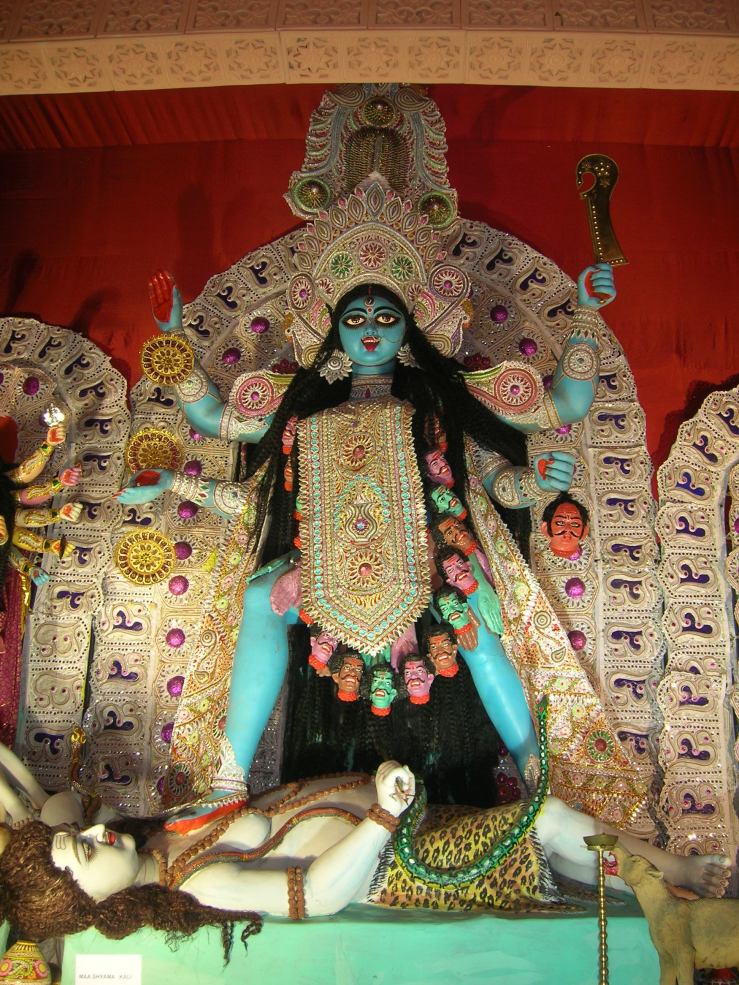
In fact,the Kālī mūrtis I’ve seen in houses and temples conform much closer to the dhyānas laid down below(also from BTS)
शवारुढां महाभीमं घोरदंष्ट्रां वरप्रदां। हास्ययुक्तां त्रिनेत्राङ्च कल्पाल-कर्तृक-करां॥
मुक्त-केशिं ललज्-जिह्वां पिबन्तिम् रुधिरम् मुहुः। चतुर्बाहुयुतम् देवीं वराभयकरां स्मरेत्॥
śavāruḍhāṃ mahābhīmaṃ ghoradaṃṣṭrāṃ varapradāṃ। hāsyayuktāṃ trinetrāṅca kalpāla-kartṛka-karāṃ॥
mukta-keśiṃ lalaj-jihvāṃ pibantim rudhiram muhuḥ। caturbāhuyutam devīṃ varābhayakarāṃ smaret॥
This is from the Siddheśvara tantra. This dhyāna can be followed alone by those who have recieved initiation in Kālī’s single-syllabled vidyā.
Then the dhyāna which conforms to the popular depictions I have seen everywhere(also from BTS) with much less ambiguity(as to the hand positions)
देवी वामोर्द्वाधोहस्ते खड्ग-मुण्डञ्च पूजयेत्।
देव्या दक्ष-हस्तोर्ध्वाधः पूजयेद् अभयं वरम्॥
devī vāmordvādhohaste khaḍga-muṇḍañca pūjayet।
devyā dakṣa-hastordhvādhaḥ pūjayed abhayaṃ varam॥
(Image original link:  )
)
This is from the Kālīhṛdaya.
If one is saying that Āgāmavāgiśa ‘popularized’ Kālī,it is this dhyāna that matches. Caveat:Not do raise doubts on the siddha,but I am unaware if Kālīhṛdaya is his own work or not.
 padmavajra